Why I Built Pi-Fusion
On this page
When several models answer the same question, their disagreements show me which assumptions need checking. They expose claims that need evidence and blind spots that one model may miss. I built Pi-Fusion to put that information in front of a coding agent before it acts.
How Pi-Fusion works
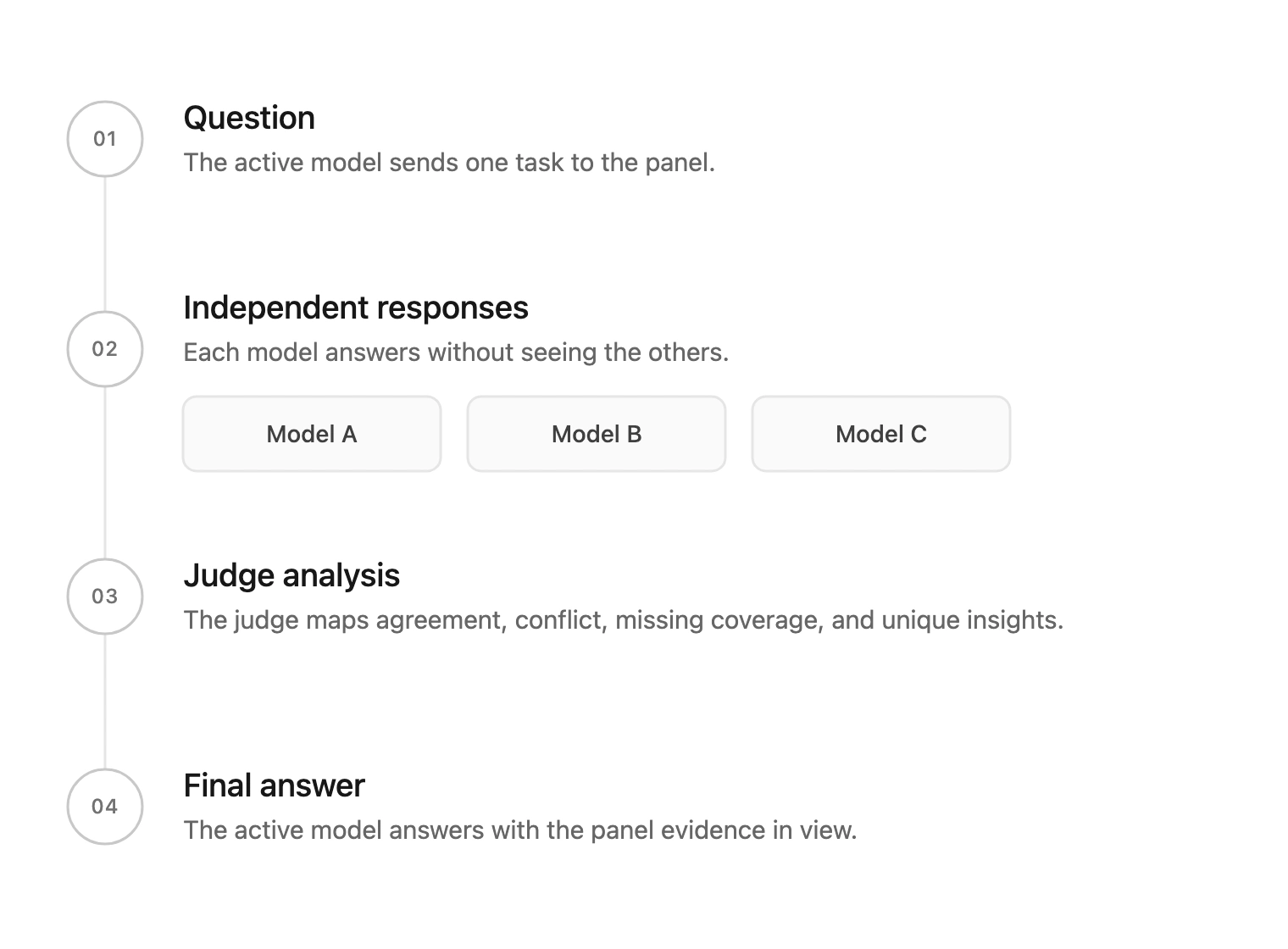
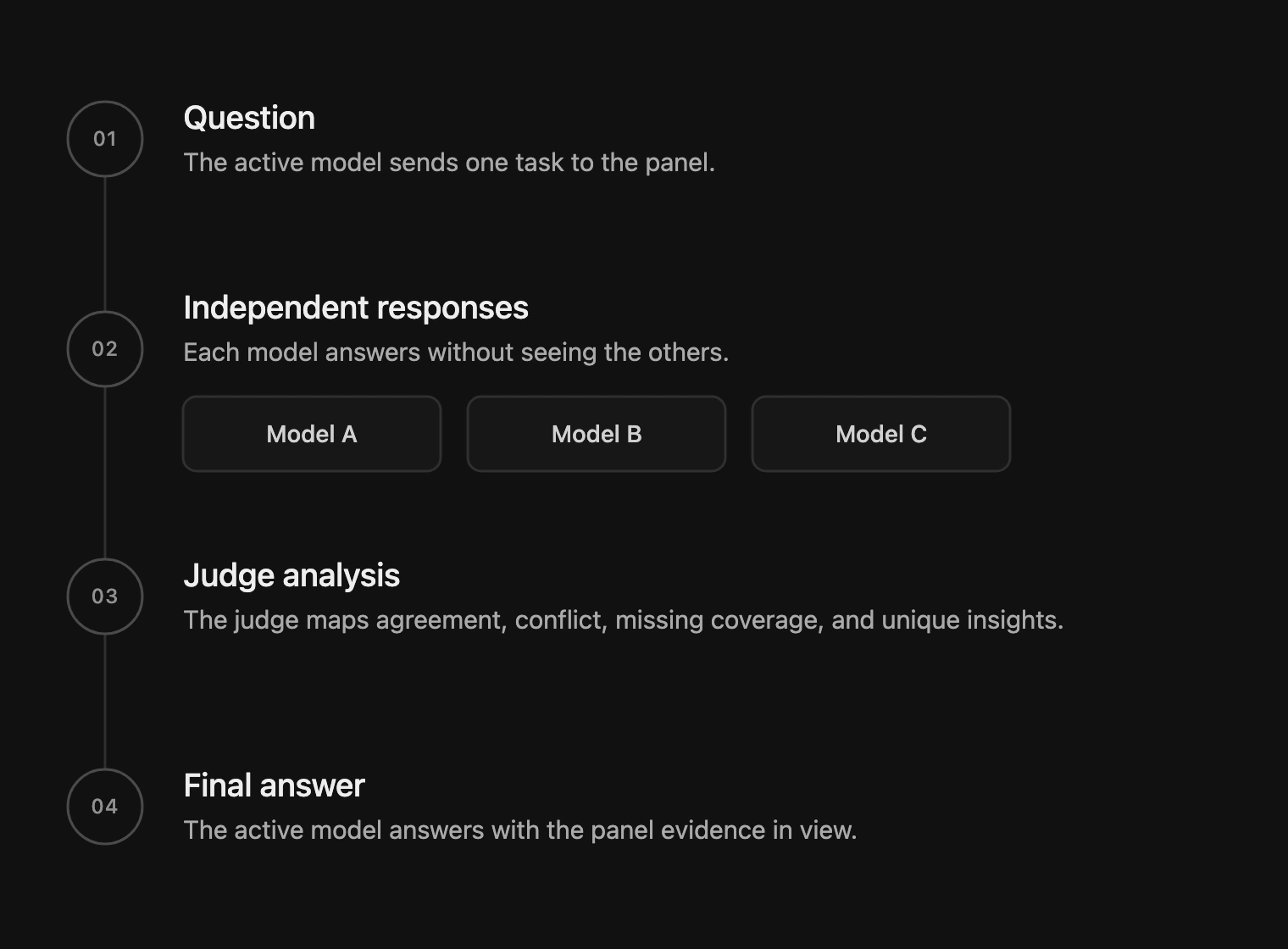
Pi-Fusion is an extension for Pi, a coding agent. Suppose I ask Pi whether a growing product should replace its REST API with GraphQL. The active model would normally reason through the trade-off and give me one answer. With Fusion, the same question goes to a panel of models I am already authenticated with. They answer independently and in parallel. One may focus on client flexibility, another on caching and operations, and another on migration cost.
A judge model compares those responses and labels the shared conclusions, contradictions, partial coverage, unique insights, and blind spots. The active model gets that analysis and the panel's responses, then writes the final answer. When the panel splits over client needs or operational complexity, the active model can see which assumptions to verify before it recommends a direction.
Models fail differently
Models from different providers are trained, tuned, and constrained differently. They can reach the same conclusion for different reasons or diverge where an assumption gets shaky. Independent agreement is a stronger signal than one model repeating its own confidence, but it is not proof.
A split gives the active model a claim to investigate. The outlier may be wrong. The majority may share a blind spot. Either way, the agent knows what evidence it needs before it commits.
Signal | What it means | What to do next |
|---|---|---|
Agreement | Models converge for different reasons. | Check why before trusting the claim. |
Disagreement | The answers split on one assumption. | Find evidence that separates the positions. |
Missing coverage | No model raised a relevant constraint. | Add the context before the active model acts. |
The panel does not decide. It shows the active model where to look next.
When I run Fusion
Each Fusion run makes several model calls and, when enough panelists answer, a separate judge call. It takes more time and more tokens than asking one model. I use it when a wrong assumption could change the decision: architecture, difficult debugging, unfamiliar codebases, consequential refactors, research, and critiques.
For routine edits, formatting, or straightforward implementation, one capable model is usually enough. When a wrong assumption would cost more than another opinion, I run Fusion.
You choose the panel, tools, and budget
Fusion sends the task to several models and can spend more time, tokens, and provider budget. In available mode, the active model decides when to request it. I still choose the panel, judge, reasoning levels, token budgets, and tool access. The invoking model supplies the task but cannot override those settings. Panel tools start off, and Fusion includes recent conversation context only when requested.
I can leave Fusion available, guarantee it for one prompt, force it for a session, or turn it off. When I want fixed cost and quality trade-offs, I can define named panels.
Try Pi-Fusion
If you already use Pi, install Pi-Fusion from npm:
pi install npm:pi-fusionRun /reload if Pi is already open. No configuration is required. Pi-Fusion chooses a panel from the models you are already authenticated with and spreads it across providers when possible. Ask Pi to use Fusion when you want another perspective, or guarantee one run directly:
/fusion Review this architecture and identify assumptions that may be wrong./fusion-setup lets you choose the panel, judge, reasoning, and tool access later. Use it first on a decision where disagreement would change your next step.